CATESOL Book Review: How to Differentiate Instruction in Academically Diverse Classrooms. 3rd edition by Carol Ann Tomlinson
05/06/2026
Michelle Skowbo
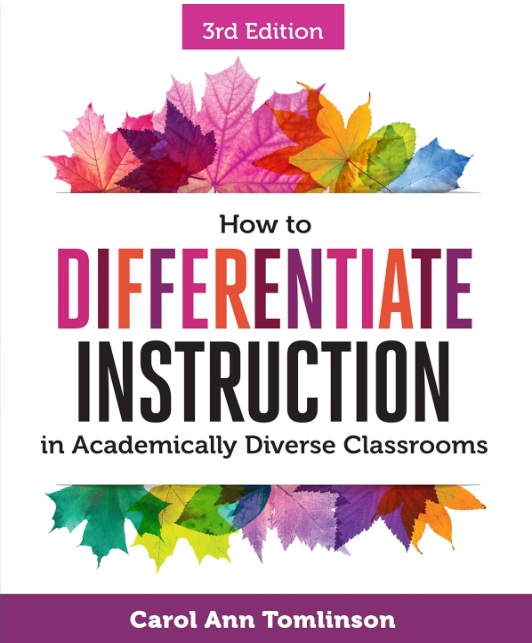
By Dr. Ragaa Shenouda
The book introduces differentiation as a responsive teaching philosophy grounded in understanding students’ varying readiness levels, interests, and learning profiles. Tomlinson emphasizes that effective instruction is not about creating entirely separate lessons for each student, but about designing flexible pathways that allow all learners to engage meaningfully with the same core content. Through concrete examples and actionable strategies, she demonstrates how teachers can adjust content, process, and product while maintaining rigor and coherence.
A central focus of the book is creating a supportive and well-managed learning environment where differentiation can thrive. Tomlinson outlines how to structure classrooms that are both flexible and purposeful, where students feel safe, respected, and challenged. She also provides guidance on planning differentiated lessons, managing time and resources, and preparing students and families for this dynamic approach to learning.
Ultimately, the book underscores a fundamental truth: academically diverse classrooms are the norm, not the exception. Students come with a wide range of abilities, cultural backgrounds, language experiences, and levels of confidence. Differentiated instruction honors these differences by making learning more inclusive, engaging, and effective, ensuring that every student has a meaningful opportunity to succeed.
Tomlinson also highlights the needs of English language learners (ELLs), emphasizing the importance of language support, clear instruction, and meaningful opportunities to practice communication in context. At the same time, she reminds educators not to overlook students in the “middle,” who also require purposeful instruction to continue progressing and avoid stagnation. A key principle in this chapter is differentiating learning experiences based on students’ varied entry points, meaning teachers adjust tasks and expectations so all learners can engage with the same essential content at an appropriate level of challenge. Ultimately, Tomlinson stresses that addressing student needs is central to differentiation. Teachers must remain flexible and responsive, using ongoing assessment and thoughtful planning to ensure that every student—regardless of level—experiences growth. The chapter concludes by arguing that effective differentiation is about creating equitable learning opportunities that support, challenge, and empower all students to succeed.
The Teacher’s Toolbox builds on these examples by offering a set of practical instructional strategies that help teachers align content, process, and product with students’ readiness, interests, and strengths. These strategies include pre-assessment and ongoing formal assessment to understand student needs, as well as interest centers, learning centers, and small-group instruction to increase engagement and provide targeted support. Teachers also use interest-based resources, flexible grouping (both similar-readiness and mixed-readiness groups), tiered lessons, student choice, discussion and problem-solving groups, varied modes of expression, differentiated homework, and reading materials of varying complexity. Peer support strategies, such as reading partners and peer reviews, further strengthen learning. Overall, the Teacher’s Toolbox provides practical, structured approaches that make differentiation more manageable, flexible, and effective in everyday classroom practice.
For example, flexible grouping means the teacher plans different group arrangements so students work in various ways during a unit—sometimes in groups, sometimes alone, and with different classmates. Groups are not fixed and are formed based on the task and students’ readiness, interests, or learning preferences. Students may work in mixed-readiness groups for discussion, similar-readiness groups for skill practice, or independently for focused work. This approach ensures appropriate support and challenge while allowing students to work with different peers.
The chapter outlines targeted strategies for both struggling and advanced learners. For struggling students, it recommends breaking tasks into smaller steps, integrating skill instruction, providing audio and visual directions, using templates and organizers, offering workshops, and revisiting the big picture. For advanced learners, it suggests encouraging deeper research, allowing early project starts, providing mentorship opportunities, and involving them in developing evaluation criteria. The chapter concludes by reinforcing that well-differentiated products allow all learners to work toward common goals while expressing understanding in ways that are appropriately challenging, engaging, and authentic.
Michelle Skowbo
How to Differentiate Instruction in Academically Diverse Classrooms. 3rd edition by Carol Ann Tomlinson
By Dr. Ragaa Shenouda
Introductory Overview
How to Differentiate Instruction in Academically Diverse Classrooms by Carol Ann Tomlinson offers a clear and practical roadmap for teaching in today’s increasingly diverse classrooms. Building on decades of research and classroom experience, this third edition refines the concept of differentiated instruction as an essential approach—not an optional strategy—for ensuring that all students can access high-quality learning.The book introduces differentiation as a responsive teaching philosophy grounded in understanding students’ varying readiness levels, interests, and learning profiles. Tomlinson emphasizes that effective instruction is not about creating entirely separate lessons for each student, but about designing flexible pathways that allow all learners to engage meaningfully with the same core content. Through concrete examples and actionable strategies, she demonstrates how teachers can adjust content, process, and product while maintaining rigor and coherence.
A central focus of the book is creating a supportive and well-managed learning environment where differentiation can thrive. Tomlinson outlines how to structure classrooms that are both flexible and purposeful, where students feel safe, respected, and challenged. She also provides guidance on planning differentiated lessons, managing time and resources, and preparing students and families for this dynamic approach to learning.
Ultimately, the book underscores a fundamental truth: academically diverse classrooms are the norm, not the exception. Students come with a wide range of abilities, cultural backgrounds, language experiences, and levels of confidence. Differentiated instruction honors these differences by making learning more inclusive, engaging, and effective, ensuring that every student has a meaningful opportunity to succeed.
Chapter 1: What Differentiated Instruction Is and Isn't
In Chapter 1, Carol Ann Tomlinson provides a clear and comprehensive explanation of what differentiated instruction is—and what it is not—by addressing common misconceptions. She explains that differentiation is not individualized instruction in the sense of creating entirely separate lessons for each student, nor is it a chaotic or unstructured approach. It is also not simply another form of homogeneous grouping, nor a superficial attempt to “tailor the same suit” with minimal adjustments. Additionally, differentiation is not limited to outliers such as only struggling or advanced learners; rather, it is designed to support all students in a diverse classroom. Tomlinson defines differentiated instruction as a proactive, intentional approach in which teachers anticipate and plan for differences among learners. It is more qualitative than quantitative, emphasizing the depth and quality of learning rather than the quantity of tasks. Differentiation is rooted in ongoing assessment, which continuously informs instructional decisions and allows teachers to adjust instruction based on students’ readiness, interests, and learning profiles. It involves using multiple approaches to content, process, and product, enabling learners to access, engage with, and demonstrate understanding in varied ways. At its core, differentiation is student-centered, aiming to maximize each learner’s growth while maintaining high expectations for all. Importantly, it is a flexible blend of whole-class, small-group, and individual instruction, allowing teachers to respond effectively to diverse needs. Tomlinson also emphasizes that differentiated instruction is organic and dynamic, evolving continuously in response to student responses and classroom interactions, creating a responsive, adaptive learning environment that promotes equity, engagement, and meaningful academic development.Chapter 2: The Rationale for Differentiating Instruction in Academically Diverse Classrooms
In Chapter 2, Tomlinson explains that the rationale for differentiated instruction is grounded in how students learn best and the need to respond to their diverse needs. She emphasizes that learning is most effective when it aligns with students’ interests, readiness levels, and learning preferences, making these factors the driving force behind effective differentiation. For example, one student may prefer to read aloud to process information, while another may be more engaged by asking questions about historical figures or events, and a third may learn best through discussion or visual materials. These differences show that students do not learn in the same way, and instruction must be flexible to support all learners. Tomlinson also encourages teachers to look at the classroom through many eyes, meaning they should consider how each student experiences learning differently. By recognizing these varied perspectives, teachers can design instruction that is more inclusive and meaningful. Ultimately, the chapter highlights that differentiated instruction is essential for creating a classroom in which all students are engaged, supported, and appropriately challenged, leading to better learning outcomes and greater academic success.Chapter 3: Thinking about the Needs of Students in a Differentiated Classroom
Chapter 3 focuses on understanding and addressing students' diverse needs in a differentiated classroom. She explains that effective teaching requires recognizing that learners vary widely in readiness, background knowledge, language proficiency, and learning pace. For advanced learners, instruction should provide appropriate challenge, depth, and opportunities for critical thinking rather than the repetition of already mastered content. For struggling learners, teachers should offer additional support, scaffolding, and structured guidance to build confidence and ensure access to essential skills and concepts.Tomlinson also highlights the needs of English language learners (ELLs), emphasizing the importance of language support, clear instruction, and meaningful opportunities to practice communication in context. At the same time, she reminds educators not to overlook students in the “middle,” who also require purposeful instruction to continue progressing and avoid stagnation. A key principle in this chapter is differentiating learning experiences based on students’ varied entry points, meaning teachers adjust tasks and expectations so all learners can engage with the same essential content at an appropriate level of challenge. Ultimately, Tomlinson stresses that addressing student needs is central to differentiation. Teachers must remain flexible and responsive, using ongoing assessment and thoughtful planning to ensure that every student—regardless of level—experiences growth. The chapter concludes by arguing that effective differentiation is about creating equitable learning opportunities that support, challenge, and empower all students to succeed.
Chapter 4: The Role of the Teacher in a Differentiated Classroom
Chapter 4 highlights key principles for effectively managing and delivering instruction in a differentiated classroom. It emphasizes the teacher’s evolving role in meeting the needs of diverse learners, where instruction is intentionally adapted to support varying readiness levels, interests, and learning profiles. Best practices focus on planning and implementing strategies that ensure all students are engaged, challenged, and supported through flexible grouping, varied tasks, and ongoing assessment. The chapter also explores how teachers learn to lead differentiated instruction by adopting dynamic roles such as a conductor of an orchestra who harmonizes diverse learner needs, a coach who guides and supports individual growth, and a jazz musician who improvises responsively to classroom interactions. Finally, it outlines practical “rules of thumb” for differentiation, encouraging teachers to be purposeful, student-centered, and responsive while maintaining clear learning goals and high expectations for all learners.Chapter 5: Learning Environment in a Differentiated Classroom
Chapter 5 focuses on the importance of the learning environment in a differentiated classroom and how it supports student engagement and success. It highlights the characteristics of an effective learning community, where mutual respect, collaboration, trust, and shared responsibility create a safe and productive space for all learners. The chapter emphasizes that teachers play a key role in fostering respect and success by establishing clear expectations, fostering positive relationships, and ensuring that every student feels valued and capable of growth. It also explains how thoughtful instructional arrangements support differentiation, including whole-class activities that build common understanding, individualized or personalized tasks that address specific learner needs, and small-group activities that promote collaboration and peer learning. Together, these strategies create a flexible and responsive learning environment where all students can thrive.Chapter 6: A Look Inside Some Differentiated Classrooms
Chapter 6 provides a closer look at how differentiation is implemented in real classrooms across different grade levels and subject areas, showing how teachers adapt instruction to meet the needs of academically diverse learners. Through examples such as Ms. Eames and her first-grade students, Mrs. Riley and her third-graders, Mr. Blackstone and his upper-elementary class, Ms. Jeffries and her eighth-grade history students, and Mr. Morales and his high school math students, the chapter illustrates how teachers use flexible grouping, tiered tasks, and ongoing assessment to support student growth while maintaining high expectations.The Teacher’s Toolbox builds on these examples by offering a set of practical instructional strategies that help teachers align content, process, and product with students’ readiness, interests, and strengths. These strategies include pre-assessment and ongoing formal assessment to understand student needs, as well as interest centers, learning centers, and small-group instruction to increase engagement and provide targeted support. Teachers also use interest-based resources, flexible grouping (both similar-readiness and mixed-readiness groups), tiered lessons, student choice, discussion and problem-solving groups, varied modes of expression, differentiated homework, and reading materials of varying complexity. Peer support strategies, such as reading partners and peer reviews, further strengthen learning. Overall, the Teacher’s Toolbox provides practical, structured approaches that make differentiation more manageable, flexible, and effective in everyday classroom practice.
For example, flexible grouping means the teacher plans different group arrangements so students work in various ways during a unit—sometimes in groups, sometimes alone, and with different classmates. Groups are not fixed and are formed based on the task and students’ readiness, interests, or learning preferences. Students may work in mixed-readiness groups for discussion, similar-readiness groups for skill practice, or independently for focused work. This approach ensures appropriate support and challenge while allowing students to work with different peers.
Chapter 7: Strategies for Managing a Differentiated Classroom
Chapter 7 focuses on practical strategies for managing a differentiated classroom in ways that support both students and teachers. It explains that differentiation increases student engagement, improves achievement, and creates a more flexible classroom where teachers can better respond to student needs. The chapter emphasizes starting with a clear purpose for differentiation, understanding students’ needs, and introducing changes at a manageable pace. Teachers are encouraged to carefully plan and time activities so students can succeed while the teacher works with individuals or small groups. It also highlights the use of anchor activities to keep students productively engaged when they finish work at different times. These are ongoing tasks such as writing in journals, creating a portfolio of work samples, practicing spelling or vocabulary, or working on speech patterns. Additional strategies include creating clear and purposeful instructions, establishing systems for grouping students, and providing a “home base” where students know where to start and return. The chapter also stresses the importance of planning for student support when the teacher is occupied, minimizing unnecessary noise and movement, organizing efficient procedures for submitting work, and teaching students how to rearrange classroom furniture appropriately. Furthermore, it highlights the need to manage transitions, support students who finish early with meaningful tasks, plan for calling students back together efficiently, and gradually increase student responsibility. Finally, the chapter underscores the value of engaging students in discussions about classroom procedures and group processes to build ownership, responsibility, and a well-functioning differentiated learning environment.Chapter 8: Preparing Students and Parents for a Differentiated Classroom
Chapter 8 focuses on preparing both students and parents for a differentiated classroom. Tomlinson explains that students need to understand why they may be given different tasks or work in different groups, and that fairness means helping each student grow, not giving everyone the same work. For younger students, teachers use simple explanations, routines, and hands-on activities to help them understand and accept different learning experiences. The chapter also emphasizes the importance of helping parents understand differentiation so they can support it at home. Tomlinson recommends sending parents early-year surveys asking about developmental milestones, such as when their child began walking, talking, singing, or dressing independently. Teachers then use this information, along with an analogy, to help parents understand that children develop at different rates, just as they learn at different rates in school. She also encourages teachers to invite parents to share insights about their child’s development, interests, and strengths, creating an ongoing partnership that supports student growth. Overall, the chapter highlights that clear communication and collaboration with both students and parents are essential for successful differentiated instruction.Chapter 9: Planning Lessons Differentiated by Readiness
Chapter 9 focuses on how teachers can plan lessons that match students’ varying levels of readiness by adjusting the difficulty while keeping the same learning goals for everyone. It introduces the “Equalizer,” a framework that helps teachers modify tasks along continua, such as from foundational to transformational thinking, from concrete to abstract ideas, from simple to complex tasks, and from dependent to independent learning. The chapter highlights the importance of using ongoing assessment to understand where students are, maintaining high expectations for all learners, and designing respectful tasks that are equally engaging rather than simply easier or harder. It also offers practical tips to avoid common mistakes, such as oversimplifying work for struggling students or giving advanced learners more work instead of more meaningful complexity. Overall, the chapter shows how readiness can guide the differentiation of content, process, and product so that every student is appropriately supported and challenged to grow.Chapter 10: Planning Lessons Differentiated by Interest
Chapter 10 focuses on planning instruction differentiated by students' interests to increase engagement, motivation, and meaningful learning. It explains how teachers can draw on students’ existing interests by incorporating strategies such as sidebar activities, interest centers, and interest groups or specialty teams, which allow learners to explore content through topics they naturally care about. The chapter also emphasizes the importance of expanding student interests by connecting learning to real-life applications and offering opportunities for new forms of expression that deepen understanding and broaden perspectives. To guide effective implementation, it highlights key principles such as maintaining alignment with learning goals, ensuring rigor while offering choice, and providing structure that supports student autonomy. A range of instructional strategies is presented to support interest-based differentiation, including orbitals, “design a day” projects, WebQuests, jigsaw activities, literature circles, negotiated criteria tasks, interest-based math problems, and interactive notebooks, all of which help create flexible, engaging pathways for students to connect personally with the curriculum.Chapter 11: Planning Lessons Differentiated by Learning Profile
Chapter 11 focuses on planning instruction differentiated by learning profiles, emphasizing how students learn best. The author explains that learning profiles are shaped by factors such as learning style preferences, intelligence preferences, and cultural influences, which together influence how students approach learning. The chapter stresses the importance of defensible differentiation, meaning instructional decisions should be intentional, based on student needs, aligned with learning goals, and not based on limiting assumptions or labels. It presents strategies to support learning profile differentiation, including complex instruction, multiple entry points, varied ways for students to organize and process ideas, and RAFT assignments that allow flexible ways for students to demonstrate understanding. A RAFT assignment is named for its four components: Role, Audience, Format, and Topic. In this strategy, students take on a specific role, write for a defined audience, use an assigned format, and focus on a key topic related to the content being studied. RAFTs can also be adapted to address students’ readiness levels and interests, making them a flexible tool for differentiation. The chapter also shows how learning profiles can guide the balanced differentiation of content, process, and product. Ultimately, the chapter stresses the importance of integrating these elements into a coherent instructional design that supports diverse learners through flexible, responsive teaching practices.Chapter 12: Differentiating Content
Chapter 12 focuses on differentiating content to better meet diverse student needs by ensuring that all learners have access to essential ideas and skills while engaging with material at appropriate levels of complexity and support. It explains that content can be differentiated by adjusting what students learn and how they access information, based on students' readiness, interests, and learning profiles. Several strategies are highlighted, including the use of varied texts and resource materials to match different reading levels and backgrounds, learning contracts that provide structured yet flexible pathways for learning, and targeted mini-lessons that address specific gaps or extend understanding. The chapter also emphasizes presenting content through different modes, such as visual, auditory, and hands-on formats, to increase accessibility. In addition, it outlines support systems that help students engage with content more effectively, including reading patterns and recordings, note-taking organizers, highlighted printed materials, digests of key ideas, and peer or adult mentoring. Finally, the chapter illustrates content differentiation through two scenarios, showing how the same learning goals can be approached in different ways to meet student needs while maintaining instructional rigor and coherence.Chapter 13: Differentiating Process
Chapter 13 focuses on differentiation, emphasizing how teachers can vary how students make sense of content based on their readiness, interests, and learning profiles. Tomlinson explains that the differentiating process involves designing activities that allow students to engage with ideas at appropriate levels of complexity and through methods that best support their learning needs. She highlights several strategies that support differentiated instruction, including flexible grouping, tiered activities, scaffolding, learning centers, and opportunities for collaboration and independent work. The chapter illustrates these ideas through classroom scenarios, such as students in Mr. Jackson’s 2nd-grade class studying communities, where activities are adjusted to provide varying levels of support and challenge, and Mrs. Miller’s 6th-grade class reading a novel, where students engage in different tasks—such as discussion groups, written responses, or creative projects—based on their readiness and interests. Overall, the chapter underscores that effective process differentiation ensures that all students actively engage in meaningful learning experiences that promote understanding and growth.Chapter 14: Differentiating Products
In Chapter 14, Carol Ann Tomlinson focuses on differentiating products to help students demonstrate meaningful understanding through sense-making activities, performance tasks, and culminating products that reflect both learning goals and individual strengths. She emphasizes that high-quality product assignments begin with clearly defined learning objectives and baseline quality expectations, followed by thoughtful planning of support structures, such as scaffolds, timelines, models, and resources. Effective teachers present assignments clearly, then differentiate them based on readiness, interest, and learning profiles, ensuring all students can engage at an appropriate level of challenge. Tomlinson outlines practical guidelines, including offering varied formats, incorporating checkpoints, and maintaining clarity about the criteria for success. Two classroom scenarios illustrate this approach: in Mrs. Appleton’s kindergarten class, students studying neighborhoods collaboratively research, design, and construct a model town, with differentiated roles and supports; in Mr. Garcia’s Spanish II class, students complete language and culture projects through which they show understanding of how cultural elements connect, with tasks and expectations adjusted to their proficiency levels.The chapter outlines targeted strategies for both struggling and advanced learners. For struggling students, it recommends breaking tasks into smaller steps, integrating skill instruction, providing audio and visual directions, using templates and organizers, offering workshops, and revisiting the big picture. For advanced learners, it suggests encouraging deeper research, allowing early project starts, providing mentorship opportunities, and involving them in developing evaluation criteria. The chapter concludes by reinforcing that well-differentiated products allow all learners to work toward common goals while expressing understanding in ways that are appropriately challenging, engaging, and authentic.